Lifelines:
Love stands head and shoulders above all of the other Christian virtues (1 Corinthians 13:13). We have spent the first half of this year looking at its various aspects and applications. God loves us. We love Him, our neighbors, our fellow disciples, even our enemies. Love is the glue that keeps us cemented in the church. Its importance cannot be overstated. Love is a primary target (1 Timothy 1:5).
Jesus came as a result of the love that God has for a sinful world. He offers an alternative to the futility and ruin that our iniquities bring on. We choose to sin. He hand-delivered a different possibility. Deity took on flesh and blood. He became one of us to salvage us. He came looking, not for the perfect but for the lost. He plunged into the cesspool that dragged Him all the way to the cross. It was His choice. He gave Himself (John 10:18). No one took Him. The perfect Son became the perfect sacrifice. He also is the perfect example.
Love is a demanding choice. It is the most noble and Christ-like decision that we could ever make. It calls for tremendous self-discipline to consistently endure the rigors of its high standards. When we assess the qualities that Paul presented in 1 Corinthians 13:4-7 we realize how challenging it is. The world has perverted the notion. Many Christians have neglected it. It is simply too difficult. Love sacrifices personal glory for selfless service and sacrifice. Jesus showed us how. He leads. We follow.
The benefits of the love of God are beyond calculation. We could begin now to assemble all of them and never complete the list. We had cut ourselves off from everyone of them, and a way was paved to regain them. It was no small chore. It took nothing less than the pure and holy Son of God hanging on a cross to make it possible. As the blood oozed from His wounds the door was opened for renewal, redemption, reconciliation and restoration of that Father and child relationship. His love did that.
When we ponder the lengths to which His love took Him, His instructions become even more remarkable, “Therefore be imitators of God, as beloved children; and walk in love just as Christ also loved you and gave Himself up for us…(Ephesians 5:1-2a).” He demonstrated it and now says, “You do it.” It is a fine Christian art to put it into practice. Occasionally, we will stumble across someone who is disciple enough to walk in those rare footprints. It is a sight to behold. Is it you?
Sermon: Do You Want To See God?
Bill Searcy – Do You Want To See God?
Lifelines:
Disciples are in a perpetual struggle with their faith. The first time the word appears in the New Testament is in the Sermon on the Mount, “You of little faith (Matt. 6:30).” Anxieties about life’s necessities reveal an inadequate trust in a Father who provides. It was not the last times that Jesus would have words about the issue.
The Lord takes a more direct shot at His disciples in circumstances that would provoke fear from the bravest of men. Their boat was literally in the eye of the storm. Some of them were veterans of the seas, but this brought fear even to their nautical hearts. The waves covered them and shook their confidence. Jesus? Well, He slept (Matt.8:24). While the others fretted, He took a nap. They panicked, and He scolded them for their lack of faith (vs. 26). Fear exposes the depth of our faith, or lack of it.
Peter was a salty old fisherman. He knew the water as well as anyone, and he knew there was no way to walk on it. Well, that is what he thought until He saw the Lord do it. Then He did it until he sank. An extraordinary request enabled him to get out of the boat and on top of the waves, and suddenly he went under. What happened? It was not the water that just about did him in. It was the doubt of inadequate faith (Matt. 14:31). It will sink us every time.
The struggle of faith really surfaced when the disciples were confronted with the Lord’s expectations about forgiveness. The standard was more than they could have imagined. To experience sin’s slap seven times in a day is one thing. For the offender to be the same person is another. To forgive that repeat offender an equal number of times was more than their wobbly faith could stand up to. Their problem is revealed in their response for more faith (Luke 17:3-5).
Our fault lines are revealed through what worries us. Our upper limits are exposed by what scares us. Drowning in doubt proves that we have a ways to go. Putting into practice the extraordinary principles that characterize a Christian demands more faith than the disciples had. They saw the need to have a greater faith than they possessed. They struggled. It seems logically that we, 2000 years removed from His steps, will too. Trusting the Lord over our senses requires raw faith, an unflinching belief in the invisible (Hebrews 11:1). We strive to build it up, everyday. If we do not have it we cannot please God (Hebrews 11:6), and that is never an acceptable option.
Lifelines:
Freedom is one of our most cherished blessings. Independence from external tyrants and internal dictators has been attained at a great price. Blood has been shed to make it possible. The innocent has died to secure it, and it has been entrusted to us for proper care and maintenance. Today, we enjoy the benefits of the sacrifice that was made long ago.
It is easily abused and lost. The history of the Israelites bears the scars that come from its neglect. After four centuries of slavery, they should have been more appreciative. Four more decades of wilderness wanderings did not make an impression deep enough to stick for long. Conquest of the Promised Land failed to drive the point home. God did so much for them, and they still forgot life’s most important lesson: Genuine freedom is found only in the Lord.
They repeatedly turned away from their Liberator and to their enslaver. They embraced the very forces that would repeatedly confiscate their freedom. They drifted from tolerance to acceptance to participants. They erased God’s lines and drew their own. Black and white was replaced with a dismal gray that failed to distinguish the holy from the profane. Wrong became right, bad became good, children of God became slaves…again and again and again. When covenantal expectations are rejected the blessings are always lost.
Sin is an enticing tool of a merciless task master whose intentions are deceptive and destructive. The brutality of the evil one is seen in the conflict that occurred on that hill nearly 2000 years ago. Men in the hands of Satan do unimaginable things, such as drive nails through the flesh of the Son of God. They also ignore the offer of freedom that He brought. Sinners would rather sin. It dresses up in attractive clothing and sells a notion of independence. Do not be fooled. It is a masquerade.
None of us is immune from the illusions of Satan. Make no mistake about it, he wants you; body and soul. He is a master of disguise, convincing us that we need to shed the shackles of God. He is a clever salesman, but if we listen carefully we will hear the rattling of chains behind every sales pitch. It is the sound of true freedom being sacrificed on the altar of evil. It was the poor choice that the Israelites made time after time. May our choices be better and wiser lest we forfeit our freedom.
Call to Praise Scripture: Romans 10:12-15
His word on it: Isaiah 6:8
Sermon: “Let Freedom Ring”
Sermon: What Are We Doing Here?
Mike Hinrichs – What Are We Doing Here
Lifelines:
It all began so very pure and innocent. Humanity had been created in the very image of God, a deliberate act by a benevolent Creator. He provided a perfect partner and an ideal environment in which to live, and then the wrong voice captured their attention. Soon, paradise was lost and wickedness took over. Violence was rampant, and God was hurt. No, not physically. It was much worse than that.
He was grieved (Genesis 6:6). It is hard to conceive that what we do affects Him, but it does. We might think that He is detached, but we would be wrong. Disinterested? Not a chance. In Noah’s day, the world had corrupted itself beyond imagination. It filled their thoughts and perverted their ways. It bore little resemblance to His pristine creation, and it broke His heart. Wonder how our Father feels today?
Jesus entered what was supposed to be a place of God (Mark 3:1ff). The people who were allegedly the people of God watched the very real Son of God with suspicion. It was the day of God. Would He heal? They greeted His questioning with a deafening silence. Ulterior motives occupied their minds. The Lord looked right through them, and the sight angered Him. It also grieved Him. Hard hearts do that. They have an impact on Deity. Wonder how our Savior feels today?
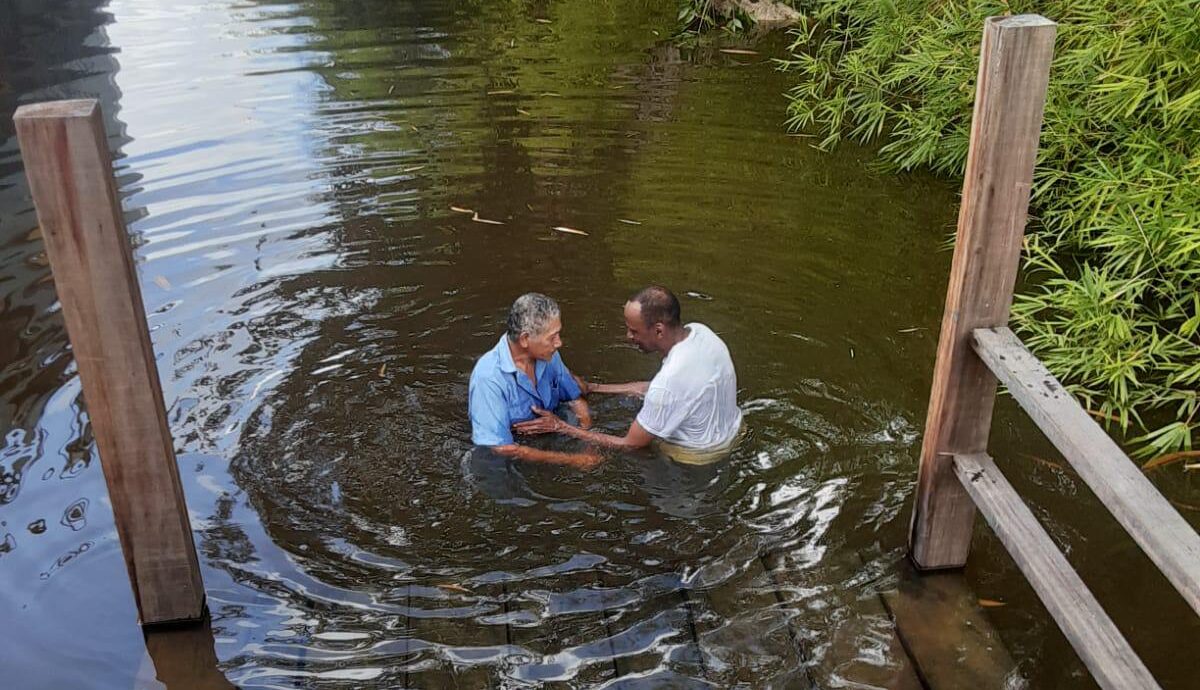
What a glorious message is the gospel. Listening to and believing that message of truth bring about marvelous changes in a sinner’s life. Among them is the sealing by the Holy Spirit (Ephesians 1:13) that accompanies baptism into Christ. In Him we have these extraordinary spiritual blessings, not the least of which is that stamp of authenticity and security with a promise of more to come (Eph. 1:14). With all that the Holy Spirit does for us, it is no wonder that inappropriate lifestyles among those He has sealed grieve Him (Eph. 4:30). Wonder how the Spirit feels today?
Scripture demonstrates a Divine reaction to human hearts, thoughts and standards of living. The Father was grieved in Noah’s day. So was the Son in His time on earth. The Holy Spirit expresses such a possibility. The fact is: We matter very much to the Deity. People that we care about bring with them the capacity to inflict pain on us at the deepest level. We call it grief. We know the feeling. God does, too.
Call to Praise Scripture: 1 Corinthians 11:23-26
His word on it: Acts 20:7
Sermon: “What are We Doing Here?”
Lifelines:
Words carry a lot of clout. God created with them. Thoughts are formed by them. The gospel is preached with them. A simple collection of consonants and vowels arranged in such a fashion that they communicate concepts and ideas. The words of the Lord are amazing in their power. At their very utterance demons invaded pigs and lepers were healed. The lame walked and the dead rose. His words are uniquely authoritative, but we must never dismiss the significance of ours.
That we should speak carefully and thoughtfully is repeatedly emphasized in Scripture. Every syllable matters. Tone matters. Body language matters. Communication is critical. What we say and the way that we say it echoes all the way into heaven. The ears of the Lord are close to our vocal chords. He is keenly aware of our sentences before we ever speak them (Psalm 139:4). Our conversations should always be exactly as they would be if the Lord were standing right along side of us, because He is. Would we choose our words more cautiously if we could see Him? Probably.
We live in a rough and tumble world, and it is reflected in the language. Crude is common. Civility is rare. Speech that was totally unacceptable a decade or two ago has become the norm. Most of our days will find us immersed in just such an environment, and it is a challenge not to have it rub off on us. Without vigilant concentration our speech patterns will become closer to those of the evil one and further from that of the Righteous One. That reflects poorly on us and our Lord.
With words we either tear down or build up. They have the capacity to do both. It is our choice which way we will use them. It is clear what the Lord would have us do. Do our exchanges encourage or discourage, edify or dismantle? Every listening ear has a need at that very moment, and every speaking tongue has a means to meet that need (Ephesians 4:29). It ought to be our ambition to communicate grace in every sentence (Colossians 4:6).
Tongue control is amazingly difficult. To be such a tiny part of our body it packs an unbelievable punch, and domesticating it demands a maturity that few possess (James 3:2). God describes it in terms of horses and bits, ships and rudders, sparks and fires when He analyzes the difficult necessity of keeping it under control (James 3:3-6). Christian behavior tests our commitment and reveals our development. Nowhere is that more true than in our speech. We will do well to remember who is always in the audience.
Call to Praise Scripture: Colossians 3:12-13
His word on it: Ephesians 4:32
Sermon: “Love is Kind”